
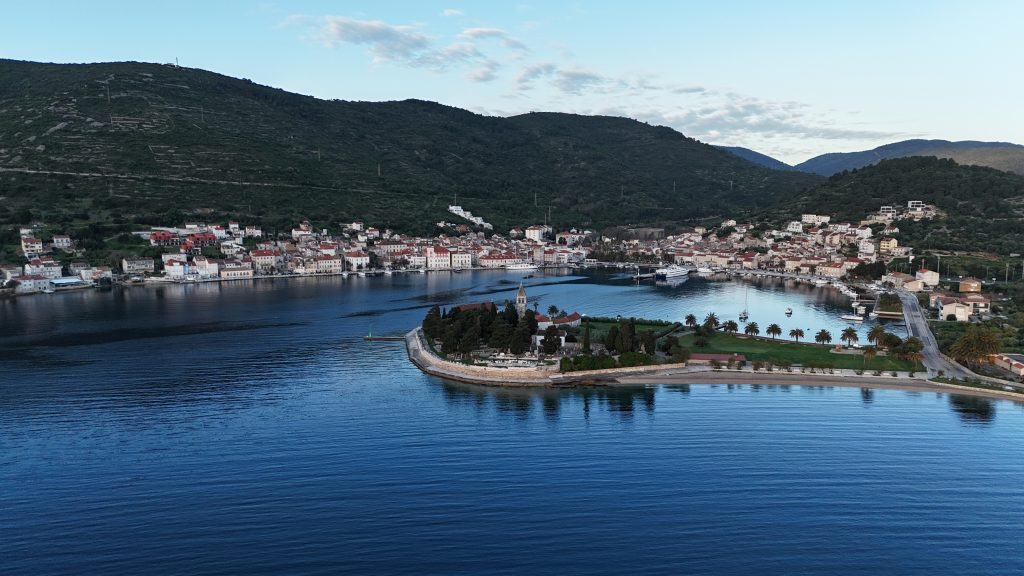
You’ve booked the BRAG Croatia tour. Now give yourself at least one full day to fall in love with Croatia before the sailing begins.
Flying into Split (SPU) and boarding a yacht to island-hop through Vis, Korčula, Hvar, and Brač is already the trip of a lifetime. But here’s the insider move that every experienced BRAG traveler swears by: arrive a day or two early. Spending 24 hours in Split before your tour departs lets your body clock reset after a transatlantic flight, your legs loosen up before the first climb, and your appetite sharpen for one of the most beautiful coastlines on earth. You’ll board the boat rested, sharp, and genuinely ready to ride.
On Day 1 of your BRAG tour, you’ll get yourself to the beautiful harbor in Trogir, where the boat sets sail that afternoon. That’s a tight turnaround if you’ve just flown in from the U.S. Arriving early is simply the smarter play — and Croatia will reward every extra hour you give it.
The first question to answer is: where do you base yourself?
Trogir or Split? Choose Your Early Arrival Home Base
Here’s the honest breakdown. Your choice depends on how much time you have and what kind of traveler you are.
If You’re Tight on Time: Stay in Trogir
Trogir is where the BRAG boat departs from, which makes it the most practical choice if you’re arriving just one day before the tour starts. The town sits only 28 kilometers from Split Airport — less than a 10-minute drive — so you can be checked in and walking the waterfront within 30 minutes of landing. No stress, no logistics.
More importantly, Trogir is genuinely worth staying in. The entire old town is a UNESCO World Heritage Site, a car-free island connected to the mainland and the larger island of Čiovo by two bridges. Spend an afternoon and evening here and you’ll understand immediately why it made the list. Medieval stone churches, a 15th-century fortress, a promenade lined with palm trees and fishing boats, and narrow streets that feel untouched by the modern world. It’s the kind of place that makes you slow down, which is exactly the right mindset before a week of cycling and sailing through Croatia.
Staying in Trogir also means you’re already at the dock on Day 1. No transfers to arrange, no clock-watching. You simply walk your luggage to the harbor.
If You Have More Time: Stay in Split
Split is Croatia’s second-largest city and one of the most extraordinary urban environments in Europe. The entire city center grew up inside and around Diocletian’s Palace, a massive Roman fortress built in 305 AD that is now a UNESCO World Heritage Site and one of the best-preserved examples of classical antiquity anywhere in the world. People live inside it. Restaurants, bars, apartments, and hotels occupy rooms that once housed Roman emperors and their guards. It’s unlike anywhere else.
If you have 48 hours before the tour, Split earns every minute of them. The city has world-class food, a vibrant nightlife, beautiful beaches, and enough cultural depth to keep you engaged for days. It also connects easily to Trogir — a 30-minute bus ride or a short taxi — so you can spend your extra day here and still make it to the harbor in plenty of time.
The practical rule of thumb: one day to spare means Trogir. Two or more days means Split, then Trogir.
Must-Do in Trogir
Walk the Old Town — All of It
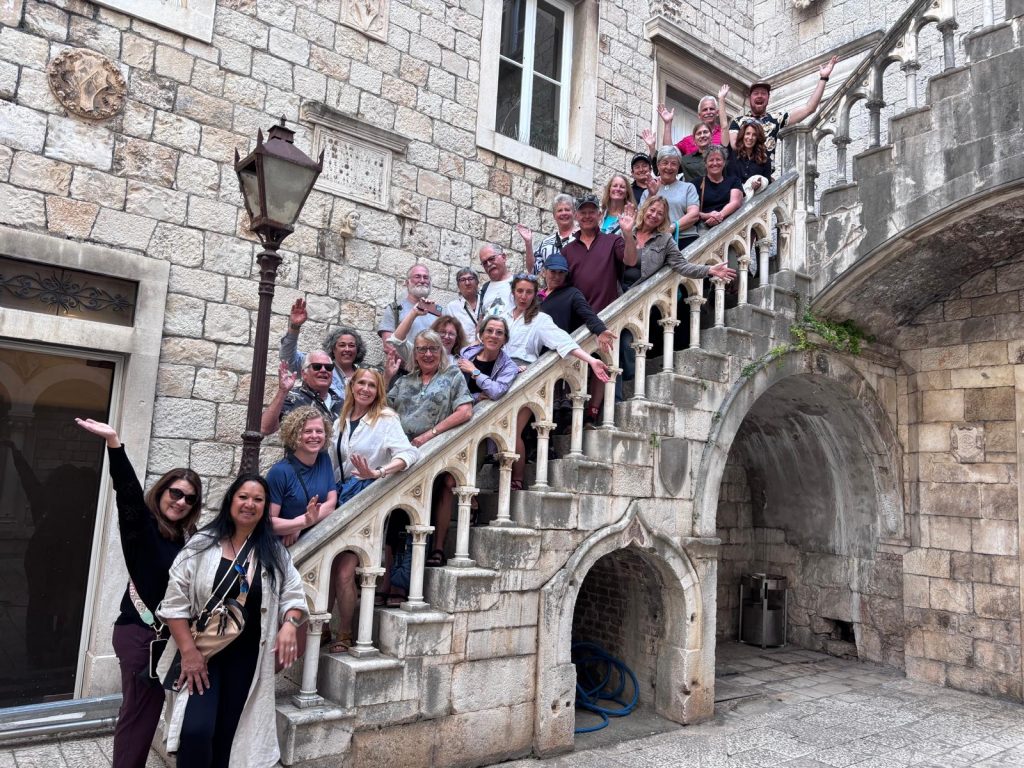
Trogir’s old town is small enough to cover on foot in a couple of hours, but compelling enough to fill an entire afternoon. Start at the Kopnena Vrata (Land Gate), a Renaissance arch that has welcomed visitors to the island since 1593. From there, wander the main square — Trg Ivana Pavla II — and find the Cathedral of St. Lawrence, a masterpiece of Romanesque and Gothic architecture whose carved portal is considered one of the finest in all of Dalmatia. Climb the bell tower for sweeping views over the red-roofed town and the glittering Adriatic beyond.
Head next to Kamerlengo Castle, the 15th-century Venetian fortress on the western tip of the island. The views from the walls are superb, and the fortress occasionally hosts open-air film screenings and concerts in summer. From there, loop back along the waterfront promenade and simply let yourself wander. Getting pleasantly lost in Trogir is one of the great simple pleasures of the Dalmatian coast.
Must-Do in Split
Diocletian’s Palace: Go Early, Go at Night, Go Twice
There is no overstating the experience of Diocletian’s Palace. This is not a roped-off ruin you observe from a distance. It’s a living neighborhood — people sleep here, cook here, run restaurants here, and hang laundry from windows that were cut into Roman walls seventeen centuries ago. Wandering through the Peristyle (the central courtyard), descending into the eerie underground cellars, ducking through the Golden Gate, and emerging onto a backstreet café terrace is genuinely one of the most transporting urban experiences in all of Europe.
Go early in the morning to beat the crowds. Then go back at night, when the palace is lit up and buzzing with people eating dinner in candlelit stone alcoves and listening to live music echo off the ancient walls. A guided walking tour is worth it for the first visit — the history adds enormous depth to what you’re seeing.
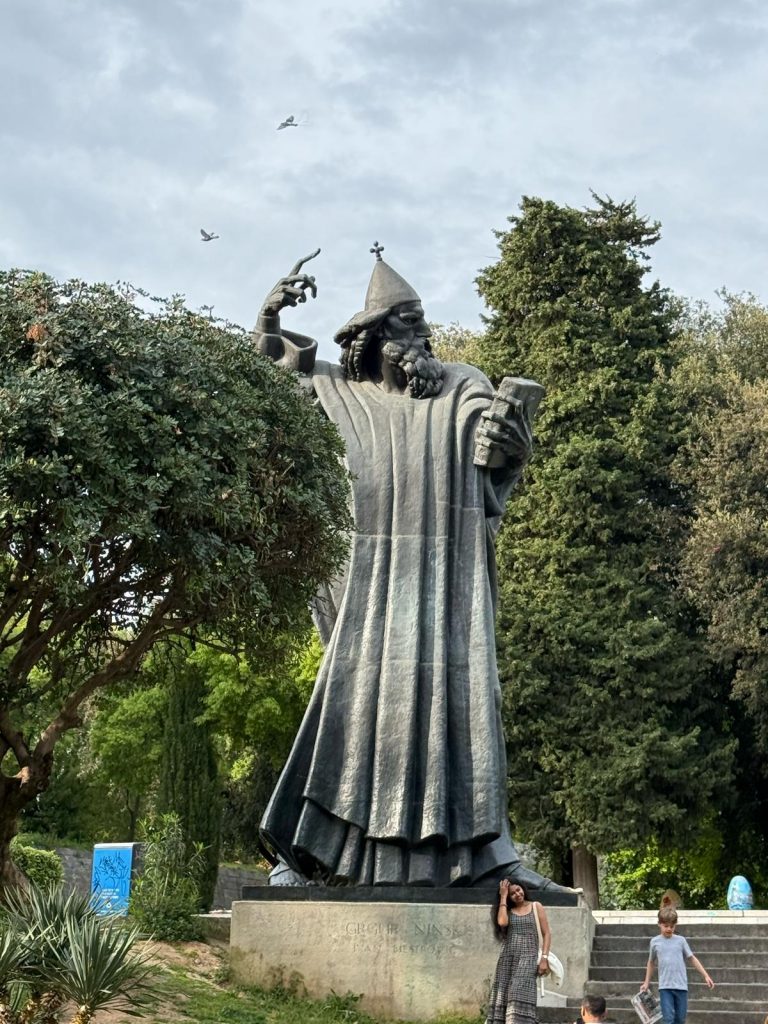
Don’t miss rubbing the big toe of the Gregory of Nin statue just outside the palace’s north gate. He’s the medieval bishop who championed Croatian language in Catholic services, and locals will tell you a rub brings good luck. Given the week of riding ahead of you, a little luck never hurts.
Marjan Hill: The Morning Climb
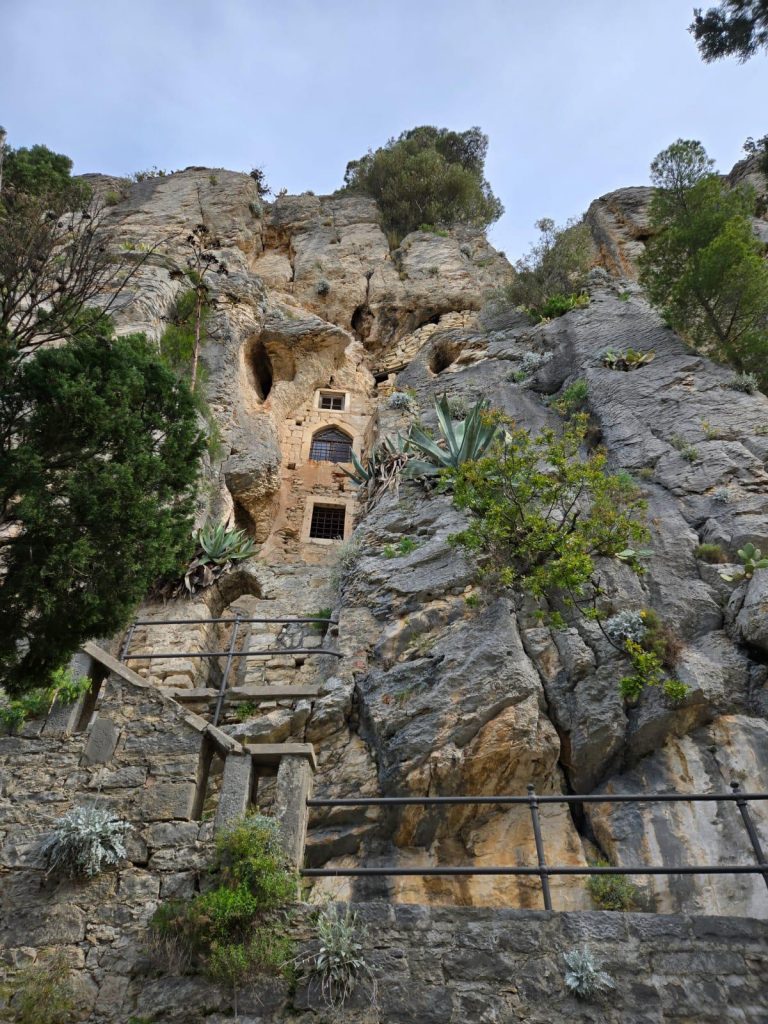
Marjan is the forested hill rising from the western edge of Split’s peninsula, and hiking up it in the early morning is one of the best free things you can do in the city. The views from the higher viewpoints — across the Adriatic to the islands you’ll be cycling and sailing around in a matter of days — are genuinely breathtaking. Go before 9 a.m. to avoid the heat and the crowds. Bring water. The effort is modest and the payoff is enormous.
Looking out from Marjan toward Brač and Hvar, you’ll get your first visual sense of what the BRAG tour covers. It makes the week feel even more real.
The Riva Waterfront
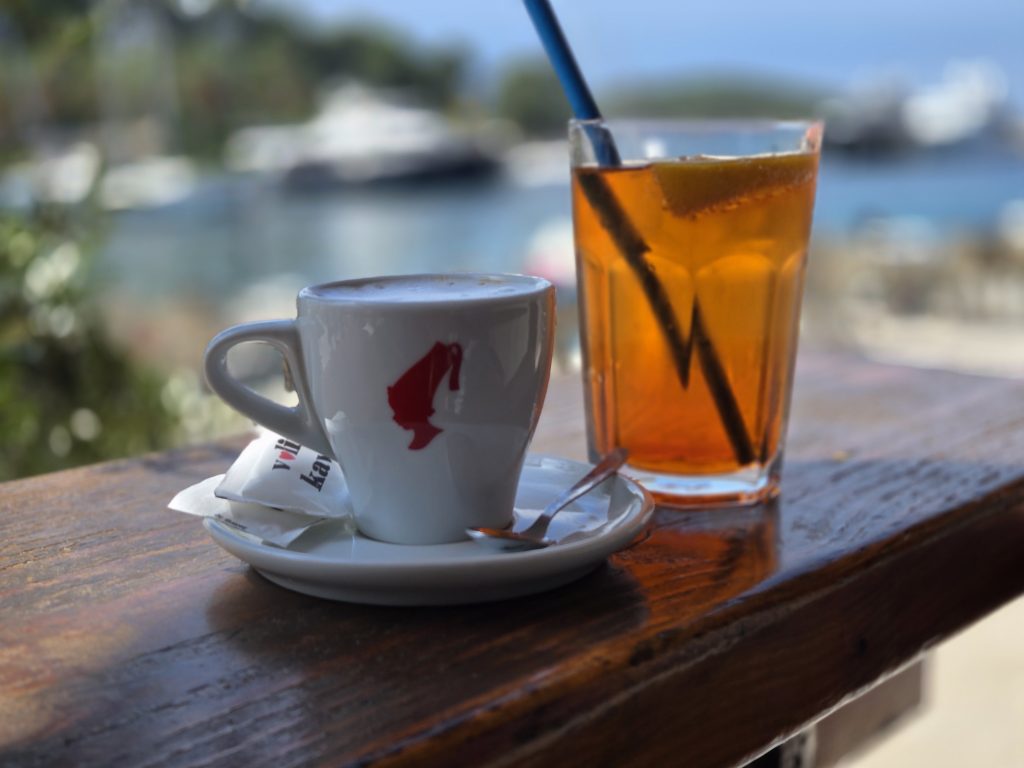
Split’s Riva is the broad seaside promenade that runs along the southern edge of Diocletian’s Palace, lined with café tables, palm trees, and an uninterrupted view of the harbor and the mountains of the Dalmatian hinterland. It’s the social heart of the city. Every local eventually passes through here. Sit down with a coffee, watch the boats, watch the people, and let Croatia wash over you. There’s nowhere better to shake off the last of your jet lag.
Bačvice Beach
Just a 10-minute walk east of the old town, Bačvice is Split’s most beloved city beach. Shallow, sandy-bottomed, and sheltered, it’s the home of picigin — a uniquely Splitski ball game played standing in ankle-deep water that looks simple until you try it. The beach is lively and fun, and the surrounding bars and cafés are excellent for a late afternoon drink after a day of sightseeing. It’s also a perfect spot to test your legs with an easy swim before the tour begins.
Optional Bonus: For the Truly Adventurous Early Arrival
If you’re arriving two or more days early and want to push beyond Split and Trogir, Croatia offers some spectacular options that go far beyond the city. These are full-day excursions best booked through a local tour operator.
Krka National Park
About 45 minutes to an hour north of Split, Krka National Park is Croatia’s most accessible national park wonder. Its defining feature is a series of dramatic travertine waterfalls cascading into brilliant turquoise pools, all walkable via a network of wooden boardwalks through lush canyon vegetation. Unlike Plitvice Lakes, swimming was historically permitted at Krka, check current regulations before you go, as policies have changed in recent years. Many tour operators run guided day trips from both Split and Trogir, typically departing around 8 a.m. and including a stop in the historic walled town of Šibenik.
Plitvice Lakes National Park
Plitvice is roughly a three-hour drive from Split, which makes it a serious commitment for a pre-tour day trip. That said, it’s one of the most extraordinary natural landscapes in all of Europe — 16 terraced lakes connected by waterfalls, walkable by wooden paths and explorable by boat, all set within a primeval forest that turns electric green in late summer. It’s been a UNESCO World Heritage Site since 1979. If you have two full days before the tour and even a passing interest in natural beauty, go. Book a guided day trip from Split; the driving is not trivial and having a knowledgeable guide significantly enriches the experience.
White Water Rafting on the Cetina River
Here’s one for the adventurous souls in the group. The Cetina River runs through a dramatic canyon just outside the coastal town of Omiš, about 30 minutes south of Split, and it offers some of Croatia’s best white water rafting. The Cetina Canyon route is fun and accessible — mostly Class II and III rapids with some calmer stretches — and suitable for beginners and experienced paddlers alike. Several operators run half-day and full-day guided trips that include canyon hiking, cave exploration, and a traditional Dalmatian lunch at a riverside konoba. Here’s a wonderful bit of foreshadowing: on Day 6 of your BRAG Croatia tour, the group visits Split and is offered an optional rafting excursion through the Cetina Canyon as an alternative to cycling. If you do it before the tour, you’ll be the one with the knowing smile when the excursion is announced.
Where to Eat: Trogir and Split
Croatian Dalmatian cuisine is exceptional and deeply seasonal. Fresh Adriatic seafood, slow-cooked meats, homemade pasta, local wines, and olive oil produced on the very islands you’ll be sailing around. Eat well before the tour starts — it’s a preview of the flavors you’ll encounter all week.
In Trogir
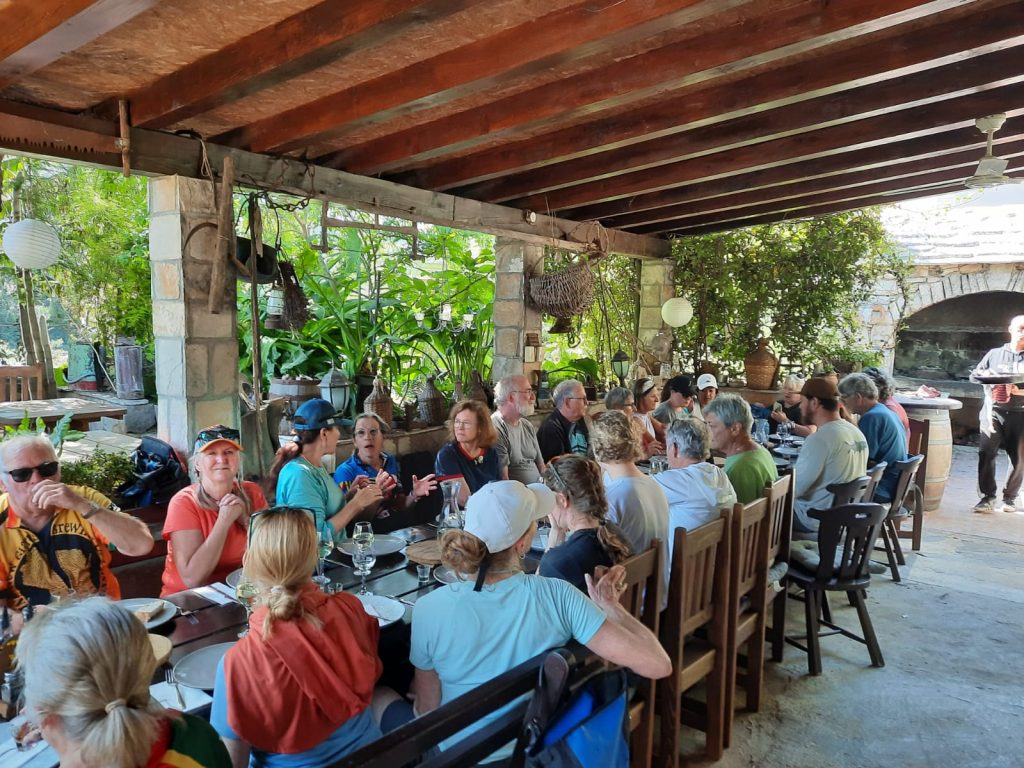
Konoba Trs — A locally beloved restaurant tucked into the old town’s narrow streets, known for fresh grilled fish, octopus salad, and Dalmatian lamb. Unpretentious and genuine. The outdoor terrace on a warm September evening is hard to beat.
Restaurant Alka — Sits right on the waterfront promenade with excellent views of the channel between Trogir and Čiovo. The seafood is reliably fresh, the portions are generous, and the setting at sunset is wonderful.
Pizzeria Mirkec — For a casual, affordable meal that locals actually eat, Mirkec delivers excellent wood-fired pizza in a relaxed setting. Great option if you want something light before your first night on the boat.
In Split
Bokeria Kitchen & Wine Bar — Inside the walls of Diocletian’s Palace, Bokeria serves modern Dalmatian cuisine in a stunning interior with high ceilings and a warm, urban atmosphere. Order the black risotto, the oxtail, or whatever the kitchen is featuring that day. The local wine list is excellent.
Villa Spiza — A small, intimate konoba hidden in the old town. No fancy décor, no elaborate menu — just daily-changing dishes made from whatever was fresh at the market that morning. It’s the kind of place locals bring their parents. Arrive early; it fills quickly.
Konoba Fetivi — Tucked into the Varoš neighborhood just west of the old town, Fetivi holds a Michelin Bib Gourmand award for its authentic, unpretentious Croatian cooking. Slow-cooked meats, homemade bread, grilled fish, and a warm family atmosphere. This is the real Dalmatia on a plate.
ZOI — For a more polished dinner, ZOI sits on the edge of the Riva with a terrace built into the actual walls of Diocletian’s Palace and direct views of the sea. The menu is Dalmatian in spirit with a refined Mediterranean touch. Book ahead.
Fig Split — For a great breakfast or brunch inside the palace walls. Excellent eggs, good coffee, and a California-inflected menu that feels both fresh and completely at home in this setting.
Neighborhoods: A Quick Orientation
Trogir Old Town — The whole island is walkable in 20 minutes. Stay here if you’re keeping it simple and want to be at the dock without a commute.
Split Old Town / Diocletian’s Palace — The most atmospheric place to stay in Split. You’re sleeping inside a Roman palace. Rooms range from modest apartments to boutique hotels. Expect noise from the nightlife until late.
Veli Varoš — The charming old neighborhood just west of the palace walls, full of stone alleys, local restaurants, and a more residential feel. Quieter than the palace, still walkable to everything.
Bačvice — Just east of the old town, close to the beach. Slightly more local in character. Good choice if beach access matters to you.
Where to Stay: Hotel Recommendations
In Trogir
Hotel Tragos ★★★★ — One of the best-positioned hotels in Trogir, located right in the old town with views of the Kamerlengo Castle and the harbor. Stone walls, traditionally styled rooms, a rooftop terrace, and a warm welcome. Excellent value for the location.
XII Century Heritage Hotel ★★★★ — For riders who want to sleep inside a piece of Croatian history the moment they land, this is the one. The hotel occupies an original 12th-century building on the waterfront promenade in the heart of Trogir’s medieval old town, which means you’re steps from the cathedral, the castle, and the BRAG departure dock. Each of the 15 rooms is individually designed, with interiors that reflect the history, art, and culture of Dalmatia — lavish without being fussy, and full of eye-catching details. Deluxe rooms feature spacious bathrooms, large double beds, and views over Trogir’s port and promenade. After a long transatlantic flight, waking up to that view with the Adriatic outside your window is the ideal way to start a BRAG week.
In Split
Hotel Marmont ★★★★ — Located right in the heart of Split’s city center, the Marmont blends contemporary design with a centuries-old stone building. A rooftop terrace offers views across the old town and out toward the Adriatic. Close to everything, but positioned on a quieter lane that keeps the noise manageable.
Murum Heritage Hotel ★★★★ — A boutique hotel set directly inside Diocletian’s Palace, with hardwood floors, exposed stone walls, and rooms overlooking the ancient courtyards. Several rooms have private terraces. This is the hotel for travelers who want the full “sleeping inside a Roman palace” experience.
Palace Judita Heritage Hotel ★★★★ — Located on Narodni trg (People’s Square), right in the heart of Split’s old town inside a 16th-century palace. Extraordinarily attentive service, beautiful rooms, and a genuinely historic setting. One of the finest boutique experiences in the city.
Hotel Cornaro ★★★★ — A few minutes’ walk north of the old town, the Cornaro is a beautifully designed modern hotel with a comfortable rooftop terrace and a bar known for its excellent selection of Croatian wines. Slightly quieter than the palace-area hotels, and a good choice for travelers who want proximity without immersion.
Practical Tips for Your Arrival
Getting from Split Airport is easy. Trogir is less than 10 minutes away by taxi. Split city center is 20 to 25 minutes. Taxis and rideshares are readily available at the terminal; there’s also a shuttle bus service between the airport and Split center.
Currency: Croatia uses the Euro. ATMs are widely available at the airport and throughout both Split and Trogir. Most restaurants and hotels accept credit cards, but carry some cash for markets, smaller cafés, and boat excursion tips.
Weather in September: September is arguably the best time to visit Croatia. Temperatures are warm but not punishing — typically 75°F to 85°F — the sea is at its warmest, and the summer crowds have thinned noticeably. Pack light clothing, a sun hat, and comfortable walking shoes. Bring a light layer for evenings on the water.
Language: Croatian is the official language, but English is widely spoken in Split, Trogir, and throughout the Dalmatian coast. You’ll have no difficulty getting around.
A note on crowds: September is busy but not the peak of summer. Diocletian’s Palace is most crowded between 11 a.m. and 4 p.m. Visit early morning or evening for the best experience.
How Your Early Arrival Connects to the BRAG Tour
Everything you experience in Split and Trogir before the tour is foreshadowing for the week ahead. The Adriatic you gaze at from the Riva is the same sea you’ll be sailing through on a yacht. The Dalmatian food and wine you enjoy over dinner is the same culinary tradition you’ll taste on every island. The sense of a civilization built into and around ancient stone — that feeling follows you from Split’s Roman palace to Korčula’s medieval old town to Hvar’s Renaissance square.
On Day 6 of the BRAG tour, the boat docks in Split and the group has the afternoon to explore together. Coming back to Split having already walked Diocletian’s Palace, climbed Marjan Hill, and eaten dinner in the Varoš neighborhood gives you a completely different perspective. You’re not a tourist seeing it for the first time. You know this city. That’s a wonderful thing.
Ready to Book Your Croatia Adventure?
The BRAG South Dalmatian Islands Bike & Boat tour is eight days of island hopping, cycling, sailing, and eating your way through some of the most spectacular scenery in the Mediterranean. Dates for 2026 are nearly sold out — one departure is already waitlisted. The 2027 trips are open for registration now.
Explore the full BRAG Croatia itinerary and reserve your cabin →
Whether you spend 24 hours in Split, two days in Trogir, or stretch your early arrival into a full Adriatic adventure, arrive rested, arrive early, and get ready for the ride of your life.
Questions? Reach out to the BRAG team at brag.org or call 404.382.7747. We’re happy to help you plan the perfect pre-tour arrival.
